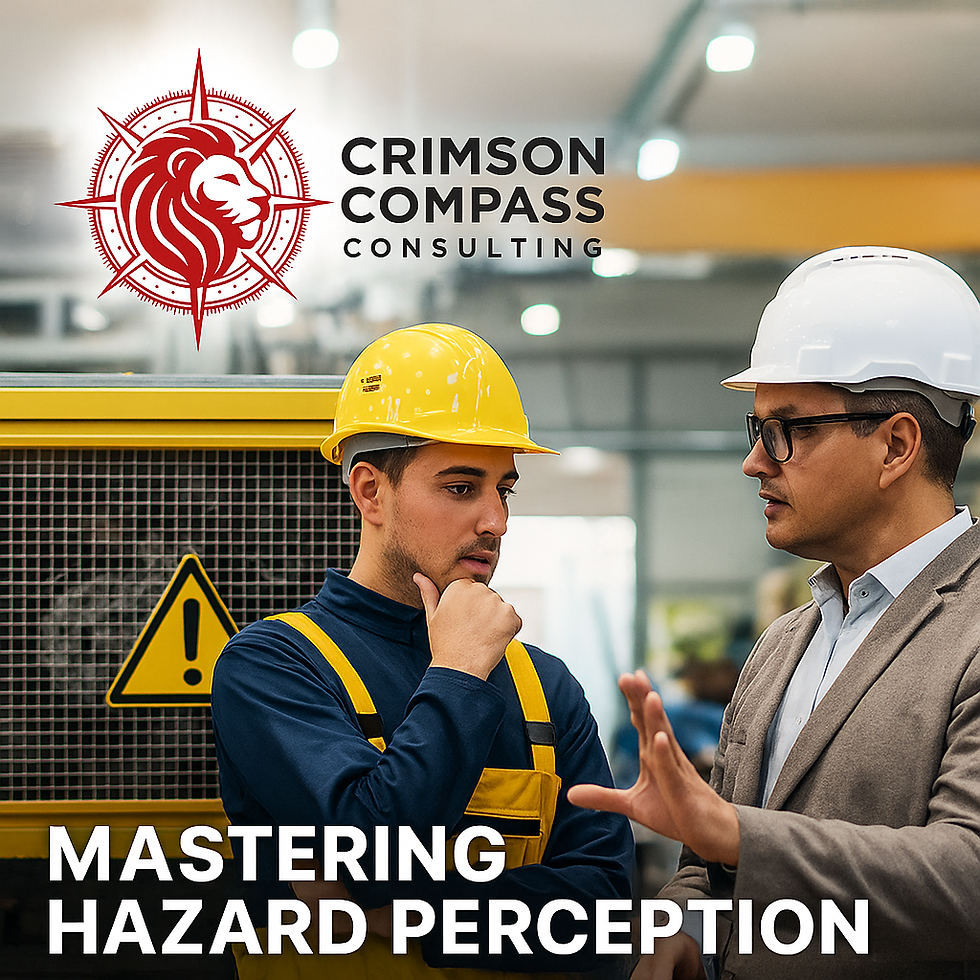
How Sharp Hazard Perception Skills Can Transform Your Manufacturing Safety Culture
- Sep 12, 2025
- 2 min read
Building a Culture of Awareness: Mastering Hazard Perception in Manufacturing
Manufacturing environments present complex safety challenges that require more than just compliance—they need a proactive approach to risk awareness. At Crimson Compass Consulting, we've seen how organizations that master hazard perception create not just safer workplaces, but more efficient and engaged teams.
The Foundation of Effective Safety Management
Hazard perception goes beyond spotting obvious dangers. It's about developing the critical thinking skills that help your workforce recognize potential risks before they escalate into incidents. This capability becomes your first line of defense against the unexpected—from machinery malfunctions to environmental hazards that could disrupt operations and harm your people.
Our experience with manufacturing clients shows that the most successful safety programs focus on building systematic awareness rather than reactive responses. Whether it's identifying early warning signs from equipment, recognizing environmental changes, or understanding human factors that contribute to risk, effective hazard perception requires structured development.
Common Risk Patterns We Help You Address
Through our work with manufacturing organizations, we've identified key risk categories that benefit from enhanced perception skills:
Mechanical hazards from moving equipment and unguarded machinery
Environmental risks including slip hazards, cluttered pathways, and unstable surfaces
Electrical dangers from damaged equipment or improper maintenance
Chemical exposures from storage issues or ventilation problems
Human factors such as fatigue, communication breakdowns, or procedural shortcuts
Developing Practical Awareness Skills
Building strong hazard perception requires practical strategies that work in real manufacturing environments. We help organizations implement approaches that maintain engagement during routine tasks—when complacency typically develops. This includes creating systematic observation practices, establishing clear communication protocols, and developing the confidence to speak up about potential concerns.
Creating Sustainable Safety Cultures
The most effective hazard perception programs we've implemented focus on cultural transformation. When teams feel empowered to identify and report potential risks without fear of blame, organizations see dramatic improvements in both safety outcomes and operational efficiency. This requires leadership commitment to learning from near-misses and creating systems that turn observations into actionable improvements.
Your Next Steps Toward Enhanced Safety Awareness
Ready to strengthen your organization's hazard perception capabilities? Our manufacturing safety expertise can help you assess current awareness levels, identify specific risk patterns in your operations, and develop targeted training programs that create lasting behavioural change.
Contact Crimson Compass Consulting to discuss how we can help you build the systematic awareness skills that protect your people and optimize your operations.